.svg)
Product News
More intelligence, more connections: The Iconik Creative Operations Platform at IBC2026

Published on
September 8, 2026


.avif)
In this article

Every media team we talk to is running more tools than they were two years ago, not fewer. More AI models. More specialized point solutions. More places where content needs to end up. The industry didn't consolidate the way anyone predicted — it fragmented, faster, with AI accelerating the sprawl instead of fixing it.
There are two common responses to that fragmentation. One is the walled garden: a platform that tries to do everything itself, and quietly locks you in while it's at it. The other is the status quo: a pile of disconnected best-of-breed tools that someone on your team stitches together by hand, over and over, for every project. But there’s a third option.
At NAB 2026, we introduced the creative operations platform: Iconik and Wildmoka working together across the media lifecycle, from ingest to publish. We said the platform would get smarter and more connected and now, at IBC2026, we’re proving it.
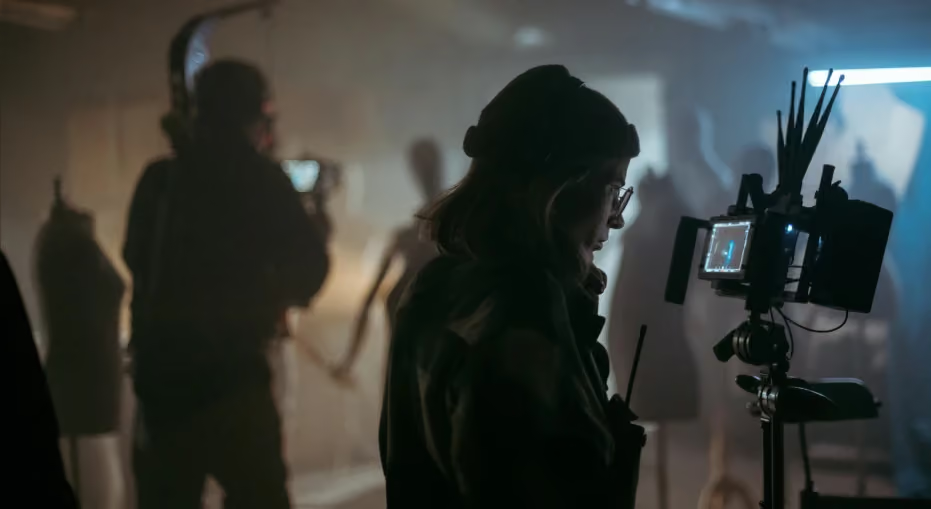
Iconik isn't trying to be the only tool in your stack. It's trying to be the layer that understands what's in your library well enough — and connects widely enough — to actively direct work across the tools you already use. Not a bigger box to put everything in. An orchestration layer for an ecosystem. One that spans across the entire media lifecycle, from ingest through creation, review and publishing.
That idea shows up in everything we're bringing to Amsterdam this year.
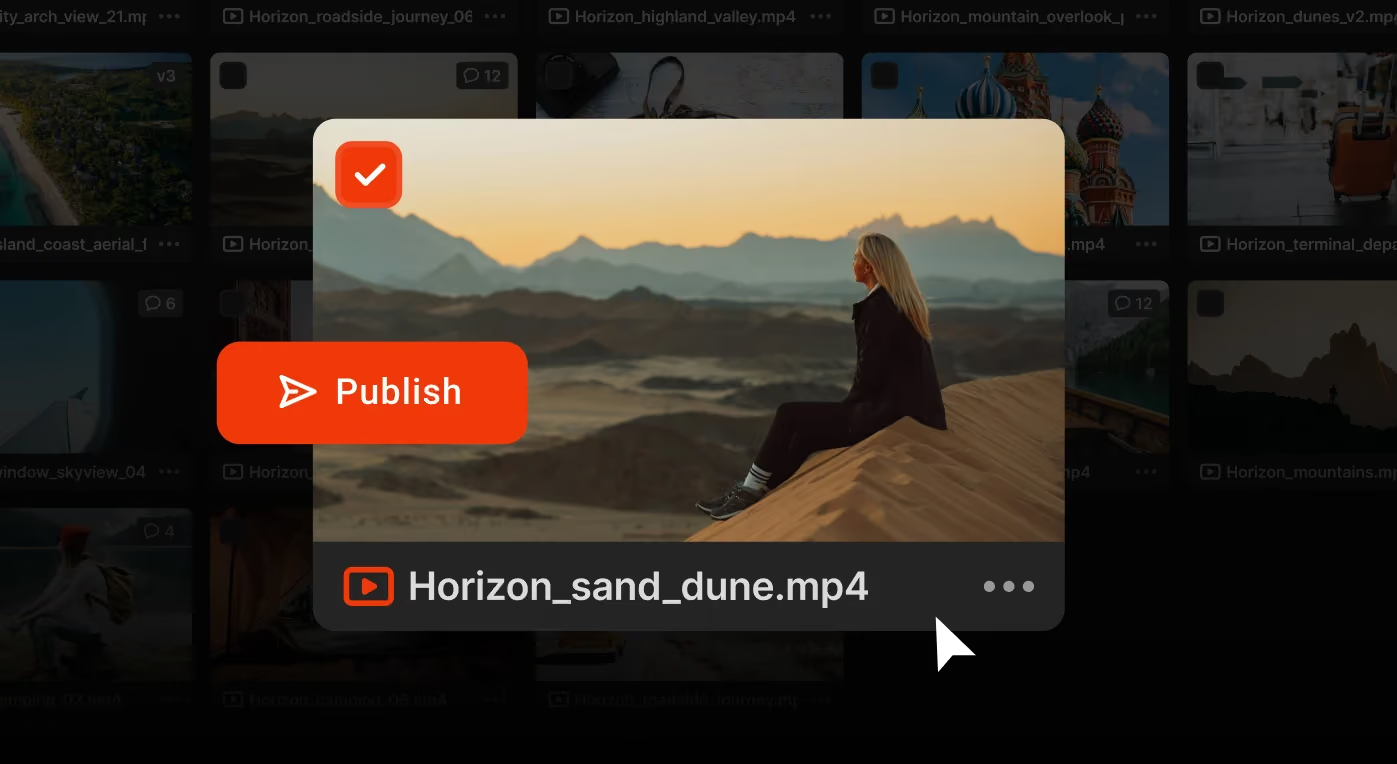
We’ve continued to evolve our newly released Iconik Publish Panel. And we’ve shipped entirely new capabilities, including:
- Deeper AI functionality across content tagging and discovery
- Growing files for live review on works-in-progress
- Brand portals for white-label asset handoffs
All of these developments build towards our core goal that Iconik should be the central nervous system for your media: an operating system that understands your content, instead of just storing it.
We’ve built our most intelligent and connected media platform ever. And none of it requires you to rip out everything and start from scratch.
Intelligence is what makes orchestration possible
A system can't direct work intelligently if it doesn't understand the content it's directing. That's the problem we've spent this cycle on: closing the gap between content landing in your library and content actually being findable, usable, and actionable.
- AI metadata enrichment lets you select an asset, choose the fields you want filled, review AI-generated suggestions, and accept the ones that are useful — individually or in bulk, with a human in the loop the whole way through.
- Natural language search (beta) lets you query your library in plain English, or in 70+ other languages, without knowing the exact filename or the underlying folder structure. Think of it as a form of semantic search purpose-built for media libraries — it's what lets Iconik reason about your content instead of just indexing it.
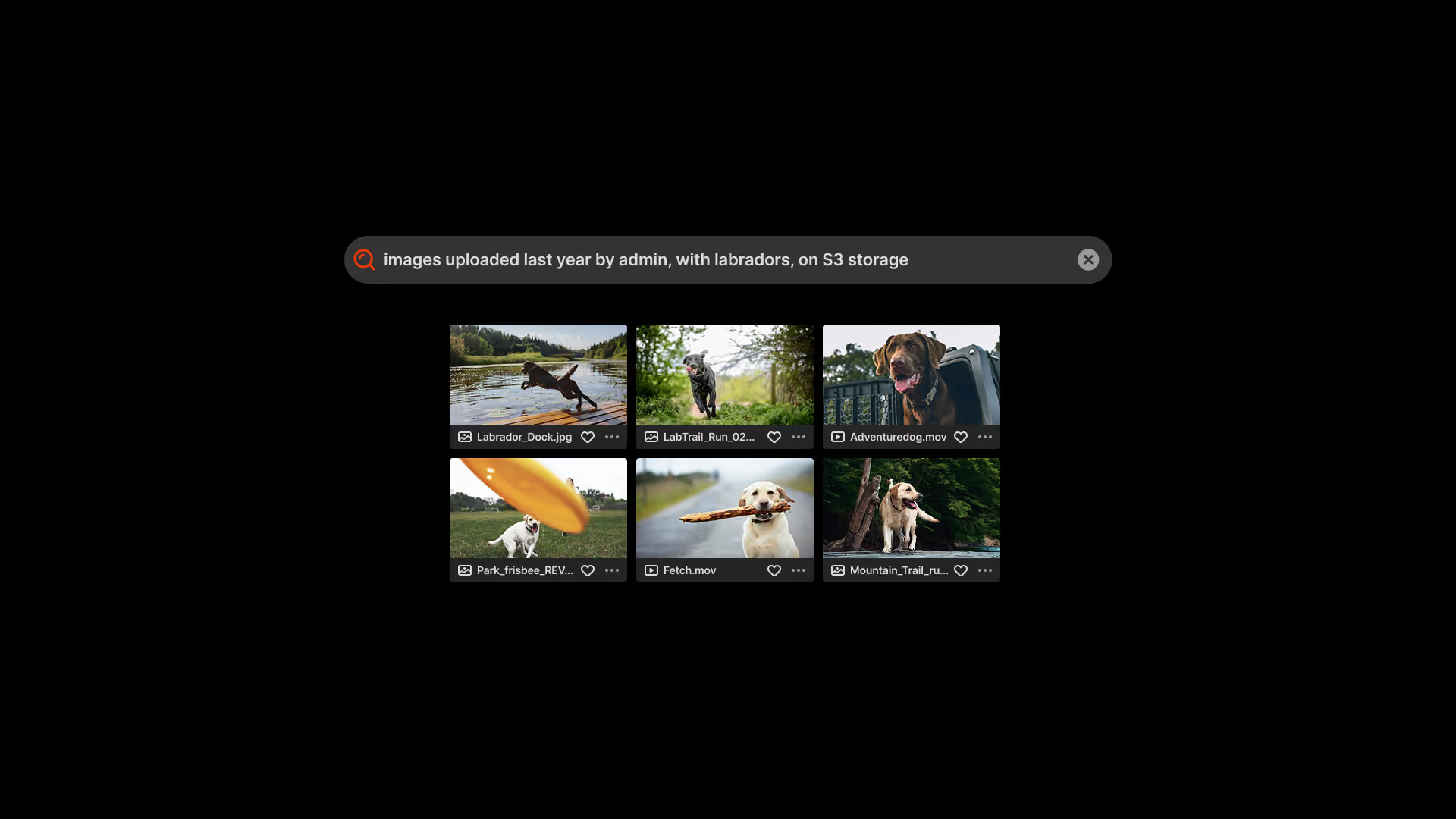
This is the foundation everything downstream depends on: you can't orchestrate what you can't understand.
Orchestration starts before the file even finishes ingesting
If understanding is the foundation, timing is the next constraint teams run into. Historically, the gap between "it happened" and "it's ready to work with" costs networks, news outlets, and sports organizations hours they don't have.
With Growing Files, your team can play, annotate, and comment on video from a live feed while it's still being captured, with a real-time indicator showing upload progress. You don't wait for the file to land to start editing — review starts the moment the signal does. It's a small structural shift with a big downstream effect: the earlier a system can act on content, the more of the lifecycle it can actually orchestrate.
Remove the handoff tax between approved asset and delivered output
The last mile of content delivery is where a lot of production workflows quietly fall apart. It’s not because the creative is bad, but because the operational plumbing isn't working. Here’s how we’re addressing that connectivity.
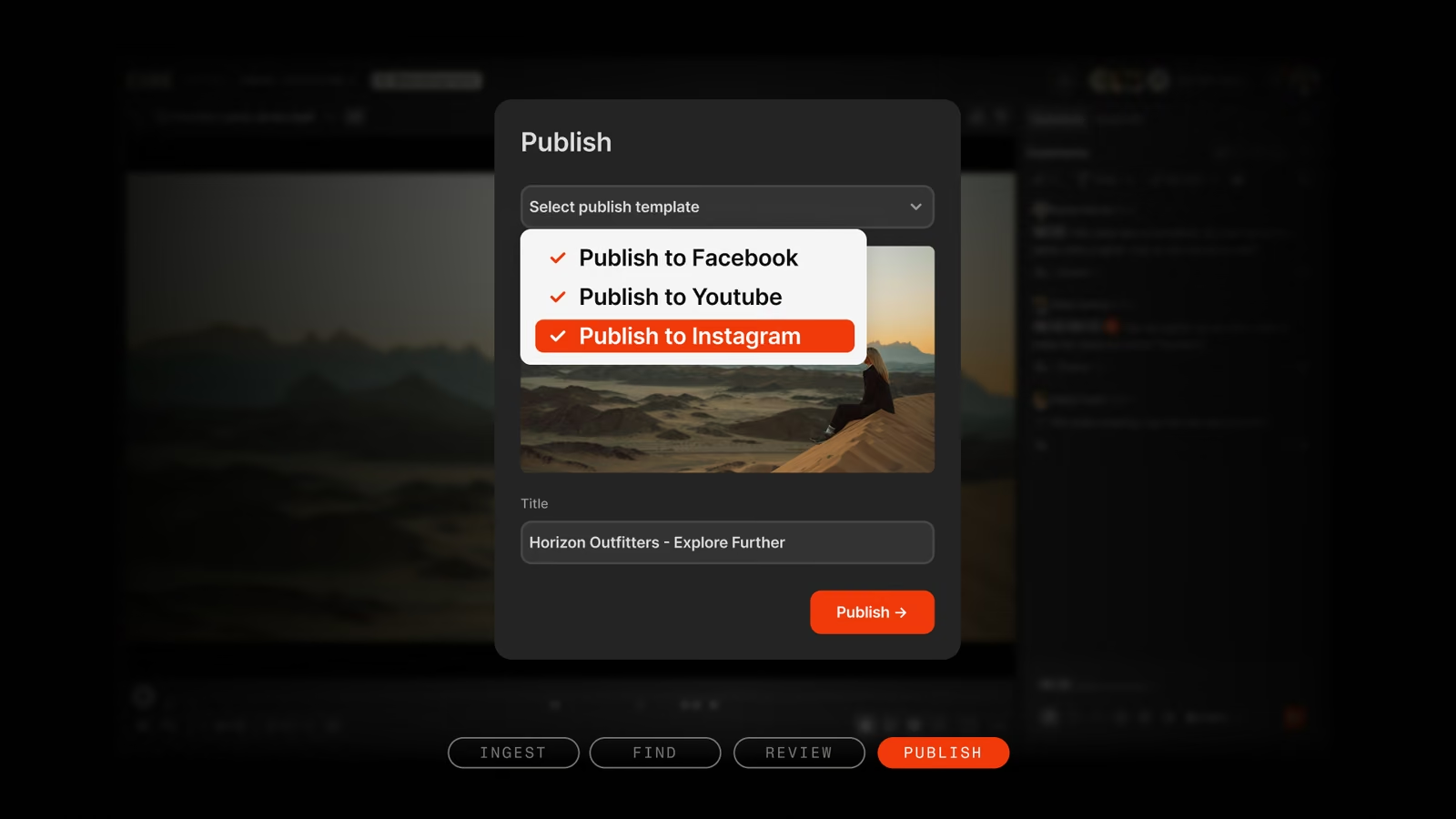
The Publish Panel now includes post management and scheduled publishing, so teams can go from organized library to approved content to published output on social platforms — all from inside Iconik, in one governed workflow.
Brand Portals close a different gap: sharing final assets externally without reaching for Dropbox, a microsite, or a one-off export. Build a branded portal directly in Iconik and share the link — clients and stakeholders get a polished handoff, and your team doesn't lose the thread on where an asset went.
Neither of these features exists in isolation. They're what it looks like when the same system that understood your content early keeps directing it all the way to delivery.
An ecosystem that plugs into you, not the other way around
This is where orchestration stops being a metaphor. New integrations at IBC let Iconik connect directly to the AI tools and platforms already in your stack, instead of asking you to route everything through one interface.
Iconik is a hub, in the sense that the more spokes you connect to it, the better it works. And at IBC, we’re introducing new capabilities and integrations that make Iconik more extensible:
- MCP Server lets outside AI tools and agents query and act on your media library without custom integrations
- CuttingRoom brings a browser-based editing timeline directly into Iconik, with an AI layer that turns a plain-English brief into a working first cut — pulling the right clips from your own transcripts and metadata. It's an early look at where editorial assembly is headed inside the platform.
- CI HUB (tech preview) connects Iconik-managed media to the design and creative tools your team already works in, including Adobe InDesign — so approved assets can be pulled into a layout without leaving the app.
An ecosystem that gets better the more you connect to it — rather than one that gets more fragile the more you add — is one you can build on for years without a rip-and-replace migration every time your stack changes.
The same intelligence and orchestration for you live content
This shift isn't limited to Iconik. In Wildmoka, AI Moments brings the same idea to live capture: automatically detecting notable action in a feed — not just what's being said, but what's happening — so teams can identify breaking news, sports highlights, and social-ready moments earlier, before a human has to comb through hours of footage to find them. It's the earliest possible point of orchestration: flagging what matters before the file is even finished.
Building a future-proof content operation, without starting from scratch
None of this requires you to rip out your existing stack and start over. That's the point. With Iconik, "do more with more" isn't a slogan about adding features — it's a description of the strategy: one platform that understands your content, connects to the tools around it, and directs work across all of it, so the systems you've already invested in keep paying off instead of getting stranded.
You don't need a platform that claims to alchemize creativity with AI. You need one that orchestrates the work you're already doing, and gets more valuable every time you connect something new to it.
See it all live at IBC
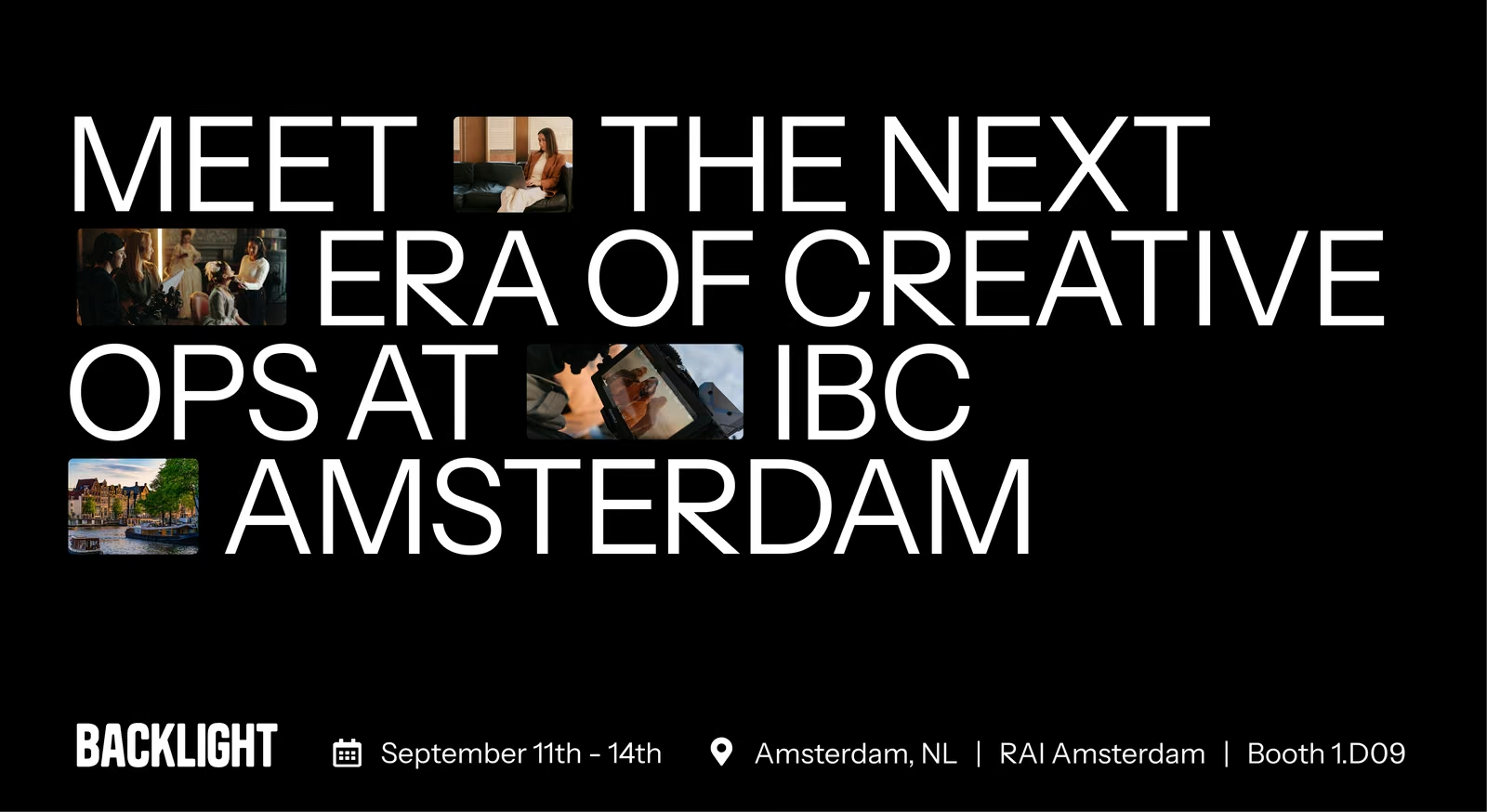
IBC2026 runs September 11-14 at RAI Amsterdam. Find us at Booth 1.D09 with live demos of every feature listed above, plus partner pods and a chance to meet our global team.
You don’t need a platform that claims to alchemize creativity with AI. You need an operations platform that highlights the work you’re already doing, while giving your team more time and space to do their best creative work. Come see what’s shipping.
Liz Dellheim leads Product Marketing at Backlight. With over 15 years experience in technology, she specializes in building go-to-market strategies for complex SaaS platforms. Her background spans growth stage start-ups to multinational technology leaders including Samsung and Thoughtworks. Liz holds a BA in Psychology from Barnard College, Columbia University and an MA in Design from Universidad de Los Andes. She lives in New York City.